Table of Contents
ToggleBuilding a smart home doesn’t require hiring a contractor or spending a fortune on high-tech gadgets. A growing number of homeowners are discovering that intelligent home automation fits naturally into DIY projects, controlled through a smartphone, voice command, or simple automation rules. Whether you’re looking to boost energy efficiency, enhance security, or simply enjoy the convenience of connected devices, turning your house into a smart home is more achievable than ever. This guide walks you through what makes a home truly “smart,” which devices deliver real value, and how to start small with budget-friendly upgrades.
Key Takeaways
- Smart homes use wireless protocols like Wi-Fi, Zigbee, and Z-Wave to connect devices that communicate automatically, eliminating the need for expensive professional installation and hardwiring.
- Smart thermostats can reduce utility bills by 10 to 15 percent by learning your schedule and adjusting heating and cooling automatically, while smart lighting and security devices add convenience and savings without requiring renovation.
- Start your smart home with one central platform (Alexa, Google Home, or Apple HomeKit), add a smart speaker, then expand gradually with high-value devices like smart thermostats, bulbs, and door locks that solve real problems.
- Budget-friendly smart home upgrades include smart plugs ($10–$20), LED bulbs ($15–$30), door sensors, and battery-powered cameras, allowing you to build a connected home without spending thousands upfront.
- Always update firmware regularly and secure your Wi-Fi password to protect your smart home devices from vulnerabilities and prevent connectivity issues when reconnecting devices.
What Makes a Home Smart and Why It Matters
A smart home is simply a house equipped with internet-connected devices that communicate with each other and can be controlled remotely or automatically. Unlike older home automation systems that required expensive hardwiring and professional installation, modern smart homes use wireless protocols like Wi-Fi, Zigbee, and Z-Wave, all of which work through a central hub or directly via your home network.
What separates smart homes from traditional systems is automation. You don’t just flip a switch: you set rules. When you leave the house, lights turn off automatically. When the sun sets, your blinds close. When motion is detected near your front door, your indoor cameras spring to life. This interconnection creates what engineers call an “intelligent ecosystem,” though you can think of it more simply: devices that work together without you having to manage each one manually.
Why does this matter for homeowners? Real savings. Smart thermostats learn your schedule and adjust heating and cooling, cutting utility bills by 10 to 15 percent in many cases. Automated lighting reduces energy waste. Smart locks eliminate the need for expensive rekeying if you lose keys. Security cameras and connected door sensors provide peace of mind at a fraction of traditional alarm system costs. Plus, unlike wiring a house during renovation, most smart devices install in minutes with no drywall damage.
The practical advantage is control, whether you’re adjusting your home’s temperature from work, monitoring your front porch while traveling, or setting up guest access without handing over a physical key. Smart home tech transforms ordinary houses into connected, automated spaces.
Essential Smart Home Devices for Every Room
Smart Lighting and Climate Control
Smart lighting is the easiest entry point because it requires no rewiring. Replace your existing bulbs with smart LED bulbs (like Philips Hue or LIFX) or install smart switches that work with standard incandescent, LED, or fluorescent bulbs. Bulbs let you adjust color and brightness from your phone: switches are better if you want multiple fixtures on one control point. A typical smart bulb costs $15 to $30, while switches run $30 to $50 each.
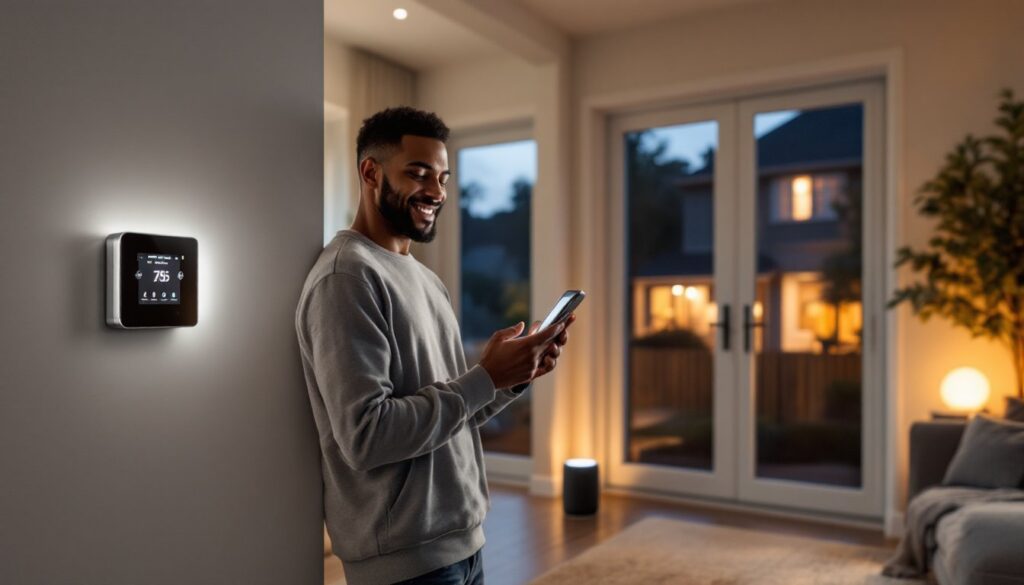
Climate control typically centers on a smart thermostat like Nest, Ecobee, or Honeywell Home. These devices monitor your home’s temperature and learn your habits, adjusting heating and cooling automatically. Installation is straightforward, most homeowners can swap their old thermostat for a smart model in under 30 minutes using only a screwdriver. You’ll need to identify your current system (gas, electric, heat pump) because compatibility varies, but manufacturers provide compatibility checkers online.
Smart window blinds and shades are optional but powerful. They integrate with thermostats to reduce solar heat gain in summer or maximize passive heating in winter. Motorized roller shades cost $150 to $400 per window but can be controlled by voice, app, or schedule, and many retrofit onto existing brackets.
Security and Access Solutions
Smart door locks replace your deadbolt without touching your door frame. Brands like August, Level Lock, and Yale allow entry via smartphone, temporary PIN codes, or biometric (fingerprint) readers. No more fumbling for keys or hiring a locksmith to rekey when someone moves out. Installation typically takes 15 to 30 minutes, though the interior workings vary, some fit over your existing lock, others replace the interior mechanism entirely.
Security cameras are essential for most smart homes. Battery-powered outdoor cameras (Wyze, Logitech Circle, Ring) mount without running power cables, while wired models offer constant recording without battery changes. Indoor cameras are smaller and cheaper ($50 to $150): outdoor weatherproof cams run $100 to $300. Most record to cloud storage (often free for a week or two, then paid plans for extended history) or locally to a microSD card.
Video doorbells like Ring or Logitech replace your front doorbell, letting you see and speak to visitors from anywhere. They’re especially useful for package theft prevention. Door and window sensors ($15 to $30 each) alert you when openings are breached, critical for security monitoring and useful for automation (like turning on hallway lights when a door opens). Most use magnetic reed switches and require no installation beyond surface mounting.
For serious security, a hub device (Amazon Echo Hub, Apple Home Hub, or Samsung SmartThings Hub) centralizes control and enables advanced automations. Many ecosystems work without a hub, but having one unlocks features like remote access when you’re away and faster automation response times. According to expert reviews of smart home devices in 2026, hubs have become essential for reliability.
Getting Started: Setting Up Your First Smart Home System
Pick a platform first, Amazon Alexa, Google Home, or Apple HomeKit are the three main ecosystems. Each has pros and cons for privacy, device compatibility, and ease of use. Alexa has the widest device support: HomeKit offers the strongest privacy controls: Google Home integrates seamlessly with Android devices. Switching later is possible but tedious, so choose based on what phones and devices your household already uses.
Start with a smart speaker or display ($40 to $150). This becomes your home’s “brain”, you talk to it, and it controls other devices. The Echo Show, Google Home Hub, and HomePod mini are solid entry points. Set it up on your home Wi-Fi network (2.4 GHz works best for smart home devices: 5 GHz can cause connectivity drops).
Next, add one or two devices that solve a real problem: a smart thermostat if heating costs bother you, or a smart bulb in your most-used room if lighting control appeals to you. Test the automation features. Does turning off your smart bulb via voice actually make life better, or is the wall switch still faster? This approach prevents overspending on gadgets you won’t use.
Once comfortable, expand room by room. Bedroom? Add smart lights and a smart plug for the nightstand lamp so you can control it by voice before bed. Kitchen? A smart display on the counter is handy for recipes and timers. Living room? Smart TV integration and lights create cinematic control. These smart home tech Don’t rush: building a system takes weeks or months, and that’s fine.
Always update firmware. Manufacturers release security patches regularly, and outdated devices become vulnerable. Most hubs auto-update, but check your devices’ apps every month for manual updates. Also, write down your Wi-Fi password securely, if you forget it later and reset your router, reconnecting dozens of smart devices is a headache.
Budget-Friendly Smart Home Upgrades for DIY Homeowners
You don’t need to spend thousands to go smart. Start with smart plugs ($10 to $20 each). Plug any device into a smart outlet, and you can turn it on or off remotely or on a schedule. Use them for coffee makers (turn it on before getting out of bed), space heaters (safety plus scheduling), or lamps. They’re especially useful for devices that don’t have smart versions.
Smart LED bulbs are the cheapest entry point if you already have compatible fixtures. A single smart bulb costs less than a month of energy savings from a smart thermostat. Start with one in a lamp, experiment, then upgrade more bulbs later.
For security on a budget, 12 smart home essentials that make life easier often include door sensors ($10 to $15 each) and motion detectors ($20 to $40). These catch break-in attempts and can trigger automation, like turning on outdoor lights when motion is detected at night.
Weather-resistant outdoor cameras now come in battery-powered versions for under $100. No electrician needed. Pair one with a doorbell camera, and you’ve covered your most vulnerable entry points without a traditional alarm system.
Save money by building around free or low-cost software. Many smart home platforms offer automation routines at no charge, Apple HomeKit includes automation free: Amazon Alexa’s routines are free. Cloud storage for camera footage often costs $3 to $10 per camera per month, but some devices include basic free tiers.
Skip luxury items early. Motorized blinds, smart irrigation controllers, and pool monitors are nice but can wait until you’re confident in the system. Focus instead on core needs: lighting, climate, security, and convenient access. Our smart home tech for beginners guide walks through foundational projects without overwhelming your budget.
Conclusion
A smart home is built incrementally, not all at once. Start small, test what actually improves your daily life, and expand from there. Pick your platform, add a central device, then layer in lighting, climate, and security as your budget and interest allow. Most DIYers finish a basic smart home in one weekend and spend the following months refining automations. The beauty of modern smart home technology is that it’s forgiving, devices work independently, so a failed experiment doesn’t break the rest of your system. Your neighbor won’t judge you for learning as you go.