Table of Contents
ToggleSmart home automation isn’t sci-fi anymore, it’s accessible, affordable, and ready for your DIY installation today. Whether you’re tired of fumbling for light switches, want to reduce energy bills, or crave the convenience of controlling your home from your phone, smart home technology delivers real results. The good news? You don’t need a contractor or a degree in electronics to get started. This guide walks you through what smart homes actually are, which devices matter most, and how to build a system that fits your budget and skill level without cutting corners on security.
Key Takeaways
- Smart home automation delivers measurable savings—homeowners using smart thermostats cut heating and cooling costs by 10–15% annually while reclaiming 30+ hours per year spent on household chores.
- Start your smart home setup with three essential categories: smart lighting, thermostats, and security devices, which offer the highest ROI and easiest installation for beginners.
- Budget $200–$300 to begin responsibly with a smart thermostat, smart bulbs or switch, and one basic camera or lock, then expand based on your specific pain points rather than buying everything at once.
- Pick a single ecosystem (Amazon Alexa, Apple Home, or Google Home) and stick with it for your first five devices to avoid compatibility issues and reduce complexity.
- Prioritize security from day one by changing default passwords immediately, enabling automatic firmware updates, using two-factor authentication, and keeping devices on a separate network segment if possible.
- Skip complex installations and keep your smart home setup simple—wireless cameras mount with screws, smart switches replace dumb switches in the same box, and most smart locks install in 30 minutes with just a screwdriver.
What Is a Smart Home and Why Should You Care
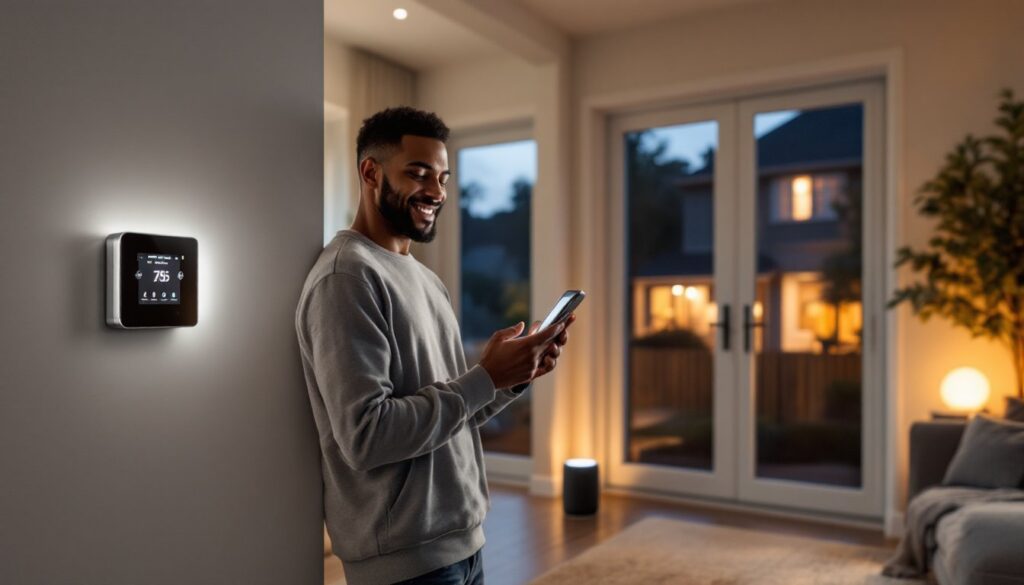
A smart home uses connected devices and automation to control household systems remotely or on schedules. Think of it as teaching your house to respond to voice commands, app taps, or predetermined routines. Your thermostat learns your patterns and adjusts itself. Your lights dim when you leave work. Your front door lock grants access to a delivery person without you being home.
Why does this matter? Time savings. Energy savings. Peace of mind. A homeowner using smart thermostats typically cuts heating and cooling costs by 10–15% annually. Security cameras that send alerts mean you know what’s happening even when you’re away. The average American spends 30+ hours per year on household chores, smart automation reclaims chunks of that time.
More importantly, smart home systems scale to your needs. You can start with a single smart bulb and grow into a fully integrated ecosystem, or stay minimal forever. There’s no pressure to “go all in.” The flexibility is the whole point.
Essential Smart Home Devices and Systems to Get Started
Smart Lighting, Thermostats, and Security
Your first three purchases should address the biggest ROI and easiest installation: lighting, climate control, and security.
Smart Lighting (like Wi-Fi-enabled LED bulbs or smart switches) requires zero installation if you choose bulbs, just unscrew and install, same as any lightbulb. If you go the smart switch route, you’ll need basic electrical wiring skills (turning off the breaker, connecting wires to terminals). Smart switches handle multiple bulbs from one point and typically cost $25–$50 per switch. Bulbs cost $8–$15 each but let you control individual lights. Neither requires new wiring or permits.
Smart Thermostats (like popular brands with learning algorithms) replace your existing thermostat. The job is straightforward: turn off power at your breaker, remove the old thermostat, and match the wire labels from your old unit to the new one. Most have clear labeling. If your system is uncommon (old pneumatic controls or dual-fuel setups), call a licensed HVAC tech, it’s not worth a $3,000 furnace mistake. Installation runs $0–$300 depending on your system’s complexity. The payoff: automated scheduling, remote control, energy reports.
Security Cameras and Smart Locks vary wildly in complexity. Wireless battery-powered cameras mount with two screws, genuine plug-and-play. Hardwired models need routing through walls and potentially a breaker connection (hire a pro). Smart locks replace just the interior cylinder of your existing deadbolt: most take 30 minutes with a screwdriver. Just measure your door thickness first to ensure compatibility. Expect $150–$400 for a decent smart lock, $100–$300 per camera.
Start here because these three categories solve immediate pain points: convenience (lighting and locks), comfort (thermostat), and safety (cameras). Everything else, smart speakers, plug outlets, door sensors, builds on this foundation.
How to Plan Your Smart Home Setup on Any Budget
Budget $200–$300 to get started responsibly. That covers a smart thermostat, one or two smart bulbs or a smart switch, and one basic camera or smart lock. It’s not flashy, but it’s real. Avoid the temptation to buy everything at once: devices you don’t understand sit in closets.
First, audit your pain points. What takes time? What costs money? What worries you? If heating bills spike in winter, prioritize the thermostat. If you forget to lock the front door, a smart lock is your move. If you can’t see packages arriving, a camera matters. The Smart Home Tech Guide covers device categories in depth, but start narrow.
Second, pick a hub or ecosystem. Most smart devices connect via Wi-Fi, but some use lower-power Zigbee or Z-Wave protocols and need a separate hub (usually $30–$60). Do your research here: Amazon’s Alexa, Apple Home, and Google Home ecosystems all work, but they don’t always play nicely together. Mixing brands is possible but adds complexity. Beginners should pick one ecosystem and stick with it for their first five devices.
Third, measure twice before buying. Door thickness for smart locks, thermostat wire counts, wall outlets near your router for cameras, these details prevent buyer’s remorse. Retailers often have return policies, but you’ll waste time.
Finally, don’t chase the cheapest option. A $20 smart bulb that drops off your network weekly is a $20 mistake that costs your sanity. Mid-range devices ($30–$60) from established brands offer reliability. Reading reviews from actual users beats brand name alone.
DIY Installation Tips and Common Beginner Mistakes
Prep work wins every time. Before unboxing anything, turn off your home’s electrical breaker if you’re installing switches or a smart thermostat. Test that the power is truly off with a voltage tester (a $10 tool that saves your life). Read the manual twice. Seriously. Manufacturers include wiring diagrams for a reason.
Wear safety glasses if you’re working in a breaker panel or tight spaces, and keep a headlamp handy: electrical panel closets are often dark. Use a flashlight or phone light when photographing wire connections before disconnecting anything, that photo saves you 20 minutes of guessing later.
Common mistake: installing devices without updating the app’s firmware first. Out-of-date devices won’t talk to your network properly. Most apps prompt you, but if they don’t, check settings before getting frustrated.
Another trap: placing your router or smart hub too far from devices. Wi-Fi doesn’t travel through metal pipes or thick concrete like we pretend it does. Your bedroom camera won’t connect if the hub is three rooms away with walls in between. Keep hubs central and elevated (like a bookshelf, not a closet floor).
Password management. Use a password manager (like Bitwarden or 1Password) to store all your smart home logins. One lost password and you’re locked out of your own thermostat. Yes, it’s annoying. Yes, it prevents worse problems.
Skip the fanciest installation. You don’t need to thread wires through walls or bury cables unless you’re in a renovation. Smart switches replace dumb switches in the same box. Cameras mount on existing outlet covers or use magnetic bases. Keep it simple and yourself sane.
Keeping Your Smart Home Secure and Private
This is non-negotiable. A breached smart home isn’t just inconvenient, it’s a privacy and security liability. Treat your smart home like your actual home: don’t leave the doors unlocked.
Change default passwords immediately. Every smart device ships with a default password. Change it the moment you set up the device. Use a strong, unique password (at least 12 characters, mix of letters, numbers, and symbols). Your password shouldn’t be the same across devices. Yes, managing passwords is annoying: a password manager makes it tolerable.
Keep firmware updated. Your smart thermostat, lock, and cameras receive security patches regularly. Enable automatic updates when available. Manual updates take two minutes but beat a security hole that stays open for months.
Segment your network if you can. If your router supports a guest network, put smart home devices on it separate from computers and phones. This limits damage if one device gets compromised. Not all routers support this, and it’s not essential, but it’s a clean layer of security.
Disable features you don’t use. Many devices ship with cloud storage, data sharing, or remote troubleshooting turned on by default. Jump into app settings and turn off anything that doesn’t serve you. Cloud video storage is convenient but adds risk: consider local storage or turning it off for some cameras.
Review privacy policies before buying. Different brands handle data differently. Some sell anonymized usage patterns to third parties. Others keep everything local. If that bothers you, research smart home reviews from tech outlets that vet privacy practices. Popular Mechanics covers device, which is worth reading.
One last thing: use two-factor authentication (2FA) on your account with your smart home’s ecosystem (Google, Amazon, Apple, etc.). A hacked Google account means someone controls your lights and your email. 2FA makes that exponentially harder.
Conclusion
Smart home automation works best when you start small, plan intentionally, and prioritize security from day one. Pick a single pain point, solve it with one device, and expand from there. The Smart Home Tech Tips and Smart Home Tech Strategies guides offer deeper dives into optimization and planning as you scale. By 2026, most new homes will ship with some smart capabilities, but retrofitting your current house is faster, cheaper, and usually smarter. Start now, trust the process, and enjoy the convenience.