Table of Contents
ToggleWater leaks hide. That’s the problem. By the time you see a stain on the ceiling or smell mildew in the wall, damage has already spread beyond what’s visible. A leak detector rental gives homeowners access to professional-grade tools without the contractor’s price tag. Whether moisture is lurking behind drywall, under flooring, or in crawl spaces, the right equipment reveals what your eyes can’t. This guide walks you through leak detection equipment, rental options, and how to use these tools to catch problems early, before they become expensive repairs.
Key Takeaways
- Leak detector rental provides homeowners with professional-grade equipment to identify hidden water sources before they cause expensive repairs, typically costing $200–$5,000+ depending on discovery timing.
- Thermal imaging cameras detect moisture by identifying temperature changes in walls and floors, while acoustic detectors locate leaks in buried supply lines and pipes by amplifying pressurized water sounds.
- Choosing the right leak detector rental depends on your problem: use thermal imaging for visible moisture in drywall and flooring, and acoustic detection for leaks in concrete slabs or inaccessible plumbing.
- Before using rental equipment, allow thermal cameras to stabilize indoors, shut off competing noise sources for acoustic detectors, and watch tutorial videos to master the tools efficiently.
- Rent from local equipment shops, water damage companies, online platforms like Fat Llama, or hire professionals ($200–$400) for full assessments if DIY leak detector rental feels too complex.
- Early leak detection can reduce repair costs from $10,000+ to just a few hundred dollars, making leak detector rental a smart preventive investment for homeowners.
What Is a Leak Detector and Why You Need One
A leak detector is any tool that locates hidden water sources by identifying moisture, sound, or temperature changes. Unlike a simple moisture meter (which only reads surface dampness), leak detectors pinpoint the location of active water movement inside walls, under slabs, or within plumbing runs.
Water leaks cost homeowners an average of $10,000 to repair when discovered late. Detecting early can mean the difference between a $200 patch and a $5,000+ mold remediation. Hidden leaks often come from burst supply lines, roof penetrations, foundation cracks, or condensation trapped in crawl spaces.
Renting a leak detector makes sense for homeowners who suspect, but can’t confirm, a problem. If you notice soft spots in flooring, unexplained water bills, or musty odors in a specific room, a leak detector rental lets you investigate before calling a plumber or water damage specialist. You’ll know exactly where the problem is, making the repair faster and more targeted.
Types of Leak Detection Equipment You Can Rent
Infrared Thermal Imaging Cameras
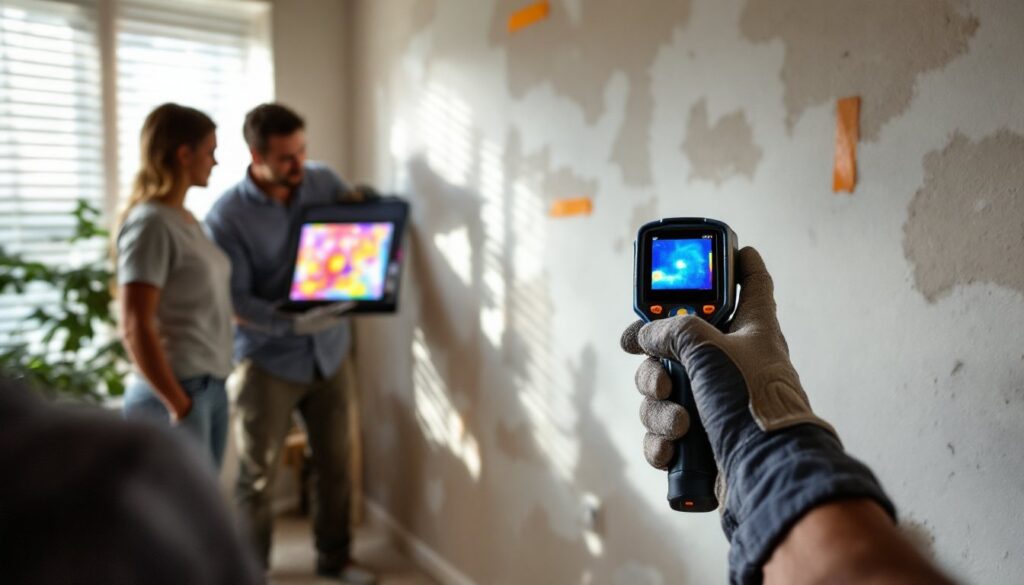
An infrared (IR) thermal imaging camera detects temperature differences in walls, ceilings, and floors. Leaking water cools the surrounding area, creating a visible thermal signature on the camera screen. The tool is non-destructive, you’re not cutting into walls, and works best on interior surfaces where moisture has pooled.
Thermal cameras excel at finding wet insulation, water in wall cavities, and moisture under flooring. Rental cost runs $50–$150 per day depending on resolution quality. The downside: they don’t work well on exterior walls on sunny days (ambient heat skews results), and they only show where moisture exists now, not necessarily the leak’s source.
Acoustic Leak Detectors
An acoustic leak detector is a handheld microphone that amplifies the sound of water escaping under pressure from a pipe. When a water line cracks or develops a pinhole, pressurized water hisses or sprays against surrounding materials, creating a distinctive sound. The detector amplifies this noise so you can hear it through a headset and pinpoint the exact section of pipe.
Acoustic detectors are the go-to for buried supply lines and pipes inside concrete slabs. Rental cost is $30–$80 per day. They require a quiet environment and a trained ear, so if you have running faucets, appliances, or traffic noise nearby, you’ll miss subtle leaks. These tools also don’t work on PVC pipe, water doesn’t make enough noise, only on copper, PEX, and metal lines under pressure.
How to Choose the Right Rental Option for Your Home
Start by defining the problem. Are you dealing with visible moisture in a specific wall, or is the leak location unknown? Does water pressure seem normal, or is it dropping?
If moisture is visible or suspected in drywall, flooring, or insulation, start with a thermal imaging camera. It’s non-invasive and gives you a visual map of wet zones. If the leak is in buried supply lines, concrete slabs, or inaccessible plumbing, an acoustic detector is the better choice, it finds the exact pipe at fault.
For best results, consider renting both tools if your home’s plumbing layout is complex or if the leak source remains unclear after one inspection. Combo rentals often cost less than renting separately. Rental locations sometimes offer guidance based on your description, tell them your symptoms, and they’ll recommend the right tool.
Budget time correctly. Thermal imaging takes 1–2 hours for a single-story home. Acoustic detection on a slab or buried line can take longer, especially if you’re learning the tool’s operation for the first time. Watch tutorial videos before rental day, or ask the rental shop for a brief walkthrough.
Using a Leak Detector: Step-by-Step Instructions
For Thermal Imaging Cameras:
- Allow the camera to stabilize. Let it sit indoors for 15–20 minutes before use so internal temperature matches the environment, reducing false readings.
- Turn off direct sunlight. Close blinds or cover windows in the target area. Thermal cameras pick up external heat through walls.
- Scan slowly. Move the camera across walls and ceilings in a grid pattern. Wet areas appear as cooler (usually darker or blue) zones on the display.
- Mark findings. Use painter’s tape or a marker to outline suspect areas for follow-up.
- Document results. Take photos of the thermal image with your phone, showing the location. Share these with a plumber or contractor.
For Acoustic Detectors:
- Ensure water pressure is normal. Turn on a faucet to confirm the system is pressurized: the leak won’t make sound if the line is depressurized.
- Choose a quiet space. Shut off HVAC, refrigerators, and ask occupants to stay out of the room.
- Listen at access points. Place the detector’s microphone against exposed supply lines, meter boxes, or outdoor shut-off valves. Listen through the headset for a hissing or spraying sound.
- Follow the sound. Gradually move along the suspected line, narrowing the location where sound is loudest. Mark the spot on the exterior or slab surface.
- Confirm with a second pass. Circle back to verify the location. Once confident, mark it clearly and note the distance from a fixed reference point (a corner, door, or outdoor fixture).
Safety Reminders:
- Wear safety glasses when working near confined spaces or when you might need to open access points.
- If humidity is very high, allow equipment extra stabilization time before use.
- Don’t force the rental equipment into tight spaces: if it doesn’t fit, stop and contact the rental shop.
Where to Rent Leak Detection Equipment
Local Equipment Rental Shops
Independent tool rental stores and franchises like Home Depot’s tool rental section, Sunbelt Rentals, or regional equipment providers stock thermal cameras and acoustic detectors. Call ahead to confirm availability, popular items rent out on weekends. Rental periods typically run 4-hour, daily, or weekly rates.
Specialty Water Damage Companies
Local water damage restoration or mold inspection companies sometimes rent equipment to homeowners. They may also offer guidance specific to your home’s plumbing layout, which can save you time. A brief phone conversation might steer you toward the right tool before you rent.
Online Resources
Rental platforms like Fat Llama or Peerspace connect homeowners with neighbors who own leak detection equipment, often at lower daily rates. Inspect condition photos carefully and read reviews. Five methods to detect hidden water leaks appear in detailed guides online, which walk through both rental and professional detection options.
Professional Services
If renting feels overwhelming, leak detector professionals available near you can handle the inspection. They charge $200–$400 for a full assessment but bring experience, multiple tools, and warranty on their findings.
Rental Tips
- Rent on a Friday if possible: you’ll have the weekend to investigate without rush.
- Ask about the learning curve: some rental shops provide 10–15 minutes of hands-on training.
- Clarify return deadlines to avoid after-hours fees.
- Ask about damage waivers or insurance if equipment requires protection.