Table of Contents
ToggleNot every corner of a home gets blasted with sunlight, and that’s okay. Low-light spaces, whether it’s a basement, a north-facing room, or an office with one small window, don’t have to be plant-free zones. The right houseplants for low light can actually thrive in conditions most gardeners assume are impossible. A shaded corner or dim hallway becomes an opportunity, not a limitation. With the right selection and straightforward care, homeowners can fill these darker spaces with lush greenery that improves air quality and adds life to otherwise bare walls. This guide covers which plants genuinely work in low light and how to keep them healthy.
Key Takeaways
- Houseplants for low light like pothos, philodendrons, snake plants, and ZZ plants thrive in spaces receiving less than 100 foot-candles of light, including basements, hallways, and north-facing rooms.
- Water low-light plants less frequently—typically every 2–3 weeks in dim conditions—and always check that soil feels dry before watering to prevent root rot.
- Low-light houseplants actively filter air pollutants, improve humidity, and reduce stress levels, making even dimly lit spaces more pleasant and productive.
- Rotate potted plants every few weeks and dust leaves every couple of months to maximize light absorption, even in minimal-light environments.
- Skip aggressive fertilizing for low-light plants; use diluted, balanced fertilizer only every other month during spring and summer, since slow growth requires fewer nutrients.
- A space with enough light to read a newspaper comfortably without turning on a light is suitable for low-light plants—complete darkness will not work.
Why Low Light Plants Transform Your Home
Bringing plants into dimly lit areas serves more than just aesthetics. Low-light houseplants work harder than their sun-loving cousins, which means they’ve adapted to extract maximum nutrition and moisture from minimal light. This resilience translates into forgiving plants that tolerate neglect better than finicky varieties.
Homowners often hesitate to decorate basements, hallways, or bathrooms because they assume plants won’t survive there. That assumption costs them. A single potted plant in an otherwise empty corner changes the entire feel of a space, it softens hard lines, introduces color, and creates a sense of care. When that plant is actually thriving rather than slowly dying, the impact multiplies.
Beyond visual appeal, these plants work genuinely. Low-light varieties actively filter air pollutants, regulate humidity, and provide psychological benefits associated with living spaces. Research consistently shows that people surrounded by plants, even in dimly lit rooms, report lower stress levels and better focus. A basement office with a pothos climbing a wall isn’t just more pleasant: it’s quantifiably better for concentration.
Understanding Light Requirements For Indoor Plants
Before shopping for plants, homeowners need a baseline understanding of what “low light” actually means. Indoor light falls into rough categories: bright indirect (near a window, indirect rays), medium indirect (middle of a room, away from direct sun), and low light (far from windows, corners, basements).
Low-light spaces typically receive less than 100 foot-candles of light, roughly equivalent to reading without eyestrain in a room with minimal natural light. Most standard interior spaces measure somewhere between 50 and 75 foot-candles away from windows. That’s the reality of the hallway or basement where homeowners want to place a plant.
Here’s the practical bit: even low-light plants need some light. They won’t thrive under desk lamps alone, and they definitely won’t tolerate a closed closet. The distinction matters. A north-facing room is genuinely low light but still viable: complete darkness is not. If a space feels dim to human eyes, it’s usually dim enough for a low-light plant but not so dark that photosynthesis becomes impossible. Testing your space is simple, if you can read a newspaper comfortably in that spot without turning on a light, the light levels work.
Top Low Light Houseplants That Actually Thrive
The following plants aren’t just capable of surviving low light, they genuinely prefer it over harsh, direct sun. These are the reliable picks that show up in every serious houseplant list because they actually deliver results.
Pothos And Philodendrons: The Easiest Options
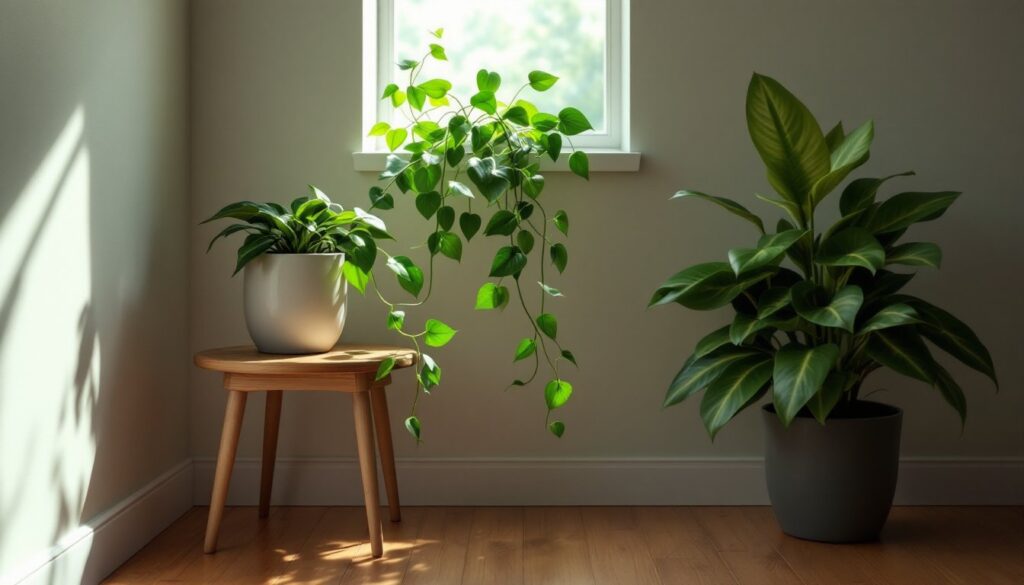
Pothos (Epipremnum aureum), also called devil’s ivy, is the gateway plant for people who think they can’t keep anything alive. It tolerates low light, irregular watering, and benign neglect with the patience of a saint. The trailing variety climbs or cascades depending on how a homeowner trains it: the heart-shaped leaves stay vibrant green even in dim corners.
Philodendrons work similarly. The heartleaf philodendron is compact and tidy: the Brasil variety adds variegation with cream and yellow striping. Both handle low light without complaint. The difference between pothos and philodendrons is subtle, pothos develops aerial roots and climbs more aggressively, while philodendrons grow more slowly and densely. Either choice works beautifully in a shadowy corner.
Care is straightforward. Water when soil feels dry an inch down: don’t water on a schedule. Low light means slower growth, so plants use less water. A pot with drainage is mandatory, soggy soil kills these plants faster than neglect. No special humidity needed, though occasional misting keeps dust off leaves.
Snake Plants And ZZ Plants: Near Indestructible Choices
Snake plants (Sansevieria) are the plants for people who travel, forget to water, or work long hours away from home. The thick, upright leaves store water, making the plant drought-resistant to an almost absurd degree. Snake plants laugh at low light. They grow slowly in shade but steadily, producing tall green (or variegated) blades that add architectural interest to any corner.
ZZ plants (Zamioculcas zamiifolia) follow similar logic. Glossy, compound leaflets arranged neatly on stems give ZZ plants an almost artificial appearance, which is exactly why offices use them. ZZ plants tolerate low light, irregular watering, and air conditioning better than most plants. Growth is slow, which homeowners often interpret as the plant “not doing anything,” but that’s the point. It’s thriving by not demanding attention.
Both plants need water only when soil dries completely, typically every 3 to 4 weeks in low-light conditions. Overwatering kills them. Snake and ZZ plants prefer drier conditions: this preference is a feature, not a bug, for busy homeowners. They also handle a wider range of temperatures and humidity than fussier plants. A basement utility room, a dark hallway, an unheated garage office, these plants shrug at all of it.
Essential Care Tips For Low Light Gardening
Caring for low-light plants differs from sun-loving varieties. The slower growth and lower light availability mean adjusting expectations and habits.
Water less frequently. Low light means slower photosynthesis and slower water uptake. A plant that needs watering every 5 days in bright light may need it only every 2–3 weeks in dim conditions. Always check soil moisture before watering: stick a finger an inch into the soil. If it feels moist, skip watering. If it feels dry, water thoroughly until it drains from the bottom. Pots without drainage holes are a slow death sentence, use a pot with a drainage hole and a saucer to catch excess water.
Rotate plants occasionally. Even in low light, a plant receives more light from one direction (typically toward the nearest window or light source). Rotating the pot 180 degrees every few weeks encourages even growth and prevents the plant from leaning dramatically toward the light.
Dust leaves every couple of months. Dust actually blocks light, no matter how minimal. Wipe leaves gently with a damp microfiber cloth or soft brush to keep light absorption efficient. This simple task takes minutes and makes a noticeable difference.
Use a light-colored pot in very dim spaces. Lighter pots reflect what little light is available, and they also tend to be ceramic or plastic (better insulating than dark containers). The aesthetic choice becomes a functional one.
Don’t fertilize as aggressively. Low-light plants grow more slowly and need fewer nutrients. Fertilize every other month during the growing season (spring and summer) with a diluted, balanced houseplant fertilizer. In fall and winter, skip fertilizer entirely, the plant isn’t actively growing, and excess salts from fertilizer build up in the soil.
According to comprehensive guides on low-light houseplants, maintaining proper watering and light conditions is the foundation of success. References in detailed houseplant care instructions emphasize the importance of drainage and humidity control. For broader home improvement insights, The Spruce offers extensive guides on plant selection and home decor integration.
Conclusion
Low-light spaces don’t mean a home has to be plant-free. Pothos, philodendrons, snake plants, and ZZ plants thrive in conditions that would kill sun-loving varieties. They’re reliable, forgiving, and genuinely improve any space. Start with one plant in the darkest corner and watch it thrive. Success there leads to filling other shadowy spots. Soon, an entire home, not just the sunny windowsill, feels alive with greenery.