Table of Contents
ToggleTop smart home tech has changed how people interact with their living spaces. Voice commands now control lights, thermostats adjust themselves based on daily routines, and security cameras send real-time alerts to smartphones. These devices save time, cut energy costs, and add convenience to everyday life.
The smart home market continues to grow rapidly. Statista projects global smart home revenue will exceed $170 billion by 2025. This growth reflects consumer demand for connected devices that simplify household tasks. From voice assistants to smart locks, homeowners have more options than ever before.
This guide covers the top smart home tech categories worth considering. Each section breaks down what these devices do, why they matter, and which products stand out in their category.
Key Takeaways
- Top smart home tech like voice assistants, smart lighting, and thermostats can save time, reduce energy costs, and add convenience to daily life.
- Smart thermostats can cut heating and cooling bills by up to 10% annually, often paying for themselves within two years.
- Smart speakers from Amazon, Google, and Apple serve as central hubs to control other connected devices throughout your home.
- Smart security devices—including video doorbells, cameras, and smart locks—provide remote monitoring and instant alerts for peace of mind.
- The Matter protocol simplifies top smart home tech purchases by ensuring cross-platform compatibility across major brands like Apple, Google, and Amazon.
- Smart lighting systems offer energy savings, enhanced security through vacancy simulation, and easy voice-controlled convenience.
Smart Speakers and Voice Assistants
Smart speakers serve as the central hub for most connected homes. These devices respond to voice commands and control other smart home tech throughout the house.
Amazon Echo devices use Alexa, which supports over 100,000 skills and works with thousands of smart home products. The Echo Dot offers an affordable entry point, while the Echo Studio delivers premium audio quality. Google Nest speakers run Google Assistant, which excels at answering questions and integrating with Google services. Apple HomePod uses Siri and works best within the Apple ecosystem.
Key Features to Consider
- Voice recognition accuracy: Modern smart speakers distinguish between household members and personalize responses.
- Sound quality: Speaker size and driver configuration affect music playback.
- Privacy controls: Most devices include physical mute buttons and voice recording deletion options.
- Multi-room audio: Connect multiple speakers to play synchronized music throughout the home.
Smart speakers also handle daily tasks like setting timers, playing podcasts, and making calls. They’ve become essential top smart home tech for families who want hands-free control over their connected devices.
Smart Lighting Systems
Smart lighting ranks among the most popular top smart home tech upgrades. These systems let homeowners control brightness, color, and scheduling from their phones or through voice commands.
Philips Hue leads the market with a wide range of bulbs, light strips, and fixtures. The Hue system requires a bridge hub but offers excellent app controls and third-party integration. LIFX bulbs connect directly to Wi-Fi without a hub, making setup simpler. Wyze bulbs provide budget-friendly smart lighting starting under $10 per bulb.
Benefits of Smart Lighting
- Energy savings: Automated schedules and motion sensors prevent lights from running unnecessarily.
- Mood setting: Adjustable color temperatures support activities from focused work to relaxed evenings.
- Security: Vacation modes simulate occupancy by turning lights on and off randomly.
- Convenience: Voice commands eliminate fumbling for switches in the dark.
Smart switches offer another approach. They replace existing wall switches and make any connected fixture “smart.” Lutron Caseta and C by GE switches work well for homeowners who don’t want to replace every bulb. Smart lighting provides an accessible starting point for anyone building out their top smart home tech collection.
Smart Thermostats and Climate Control
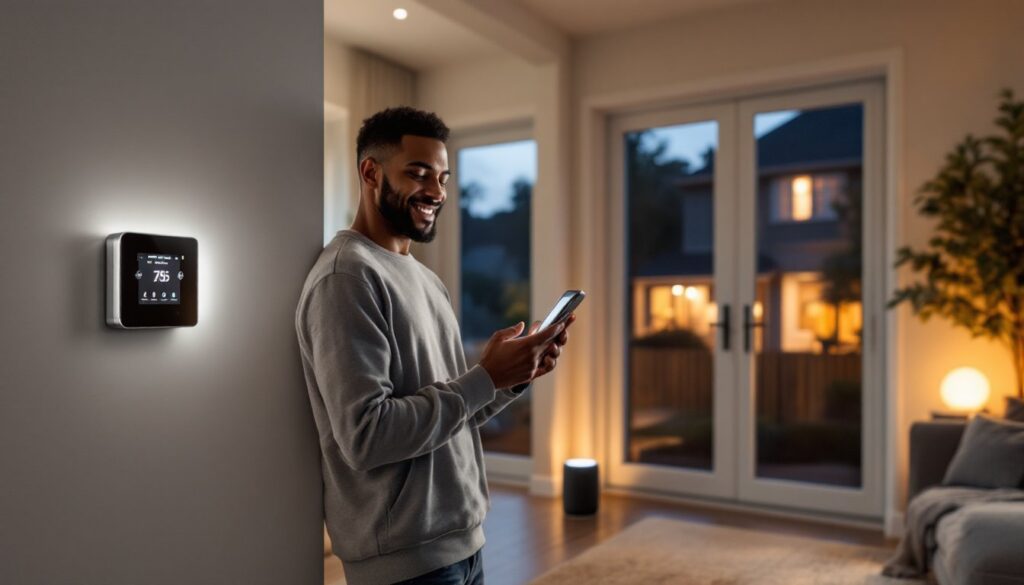
Smart thermostats deliver measurable savings on heating and cooling costs. The Department of Energy estimates that properly programmed thermostats can save homeowners 10% annually on energy bills.
The Nest Learning Thermostat tracks household patterns and creates automatic schedules. It adjusts temperatures when residents leave and pre-heats or cools before they return. Ecobee thermostats include remote room sensors that detect occupancy and temperature differences throughout the home. The Ecobee Premium adds air quality monitoring and built-in Alexa.
Honeywell Home T-series thermostats offer straightforward programming with smart features at lower price points. These devices integrate with most HVAC systems and support geofencing to trigger away modes automatically.
What Makes Smart Thermostats Effective
- Learning algorithms: Devices study usage patterns and optimize schedules over time.
- Remote access: Adjust settings from anywhere using smartphone apps.
- Energy reports: Monthly summaries show usage trends and saving opportunities.
- HVAC monitoring: Some models alert homeowners to filter changes or system issues.
Smart thermostats represent practical top smart home tech that pays for itself through reduced utility bills. Most homeowners recoup their investment within two years.
Smart Security Devices
Smart security devices give homeowners peace of mind and remote monitoring capabilities. This category includes cameras, doorbells, locks, and complete alarm systems.
Ring Video Doorbell remains one of the best-selling top smart home tech products. It captures HD video, enables two-way communication, and sends motion alerts. Arlo cameras offer wireless installation and excellent night vision. Google Nest Cam works seamlessly with other Google devices and provides 24/7 recording with a Nest Aware subscription.
Smart Locks
Smart locks eliminate the need for physical keys. August Wi-Fi Smart Lock retrofits over existing deadbolts and preserves the exterior key cylinder. Schlage Encode features a built-in Wi-Fi chip and keypad for code entry. Yale Assure locks support multiple access methods including fingerprint recognition.
Complete Security Systems
Simplisafe and Ring Alarm offer DIY installation with professional monitoring options. These systems include door sensors, motion detectors, and base stations with cellular backup. ADT and Vivint provide professionally installed systems with 24/7 monitoring services.
Smart security represents essential top smart home tech for protection and convenience. Remote lock control, package detection, and instant alerts help homeowners stay connected to their property from anywhere.
Smart Home Hubs and Integration
Smart home hubs connect devices from different manufacturers into one unified system. They solve compatibility issues and enable complex automation routines.
Samsung SmartThings supports Z-Wave, Zigbee, and Wi-Fi devices from hundreds of brands. The platform allows detailed automation rules, like turning on porch lights when a motion sensor detects movement after sunset. Amazon Echo devices with built-in Zigbee hubs can control compatible smart home tech directly without separate hardware.
Apple HomeKit provides integration for iOS users through the Home app. HomeKit-compatible devices appear in one interface and respond to Siri commands. The protocol emphasizes security with end-to-end encryption.
Matter Protocol
Matter represents a new industry standard launched in late 2022. Major manufacturers including Apple, Google, Amazon, and Samsung support this protocol. Matter-certified devices work across platforms without compatibility concerns. This standard simplifies top smart home tech purchases because consumers no longer need to verify ecosystem compatibility before buying.
Automation Possibilities
- Scene creation: One command triggers multiple device actions simultaneously.
- Conditional triggers: If-then rules respond to time, location, or sensor data.
- Cross-brand control: Manage lights from one company and thermostats from another in the same app.
A good hub ties together top smart home tech from various categories into a cohesive, responsive system.