Table of Contents
ToggleA backed-up drain is one of those home headaches that hits at the worst time, usually on a weekend when plumbers charge premium rates. A professional drain cleaning service can run $200 to $500 or more, depending on the clog’s severity. Before calling a contractor, though, homeowners have another option: renting a drain cleaning machine. Drain cleaning machine rental puts power in your hands, lets you tackle the job on your schedule, and can save hundreds of dollars. This guide walks through the types of machines available, how to pick the right one for your situation, and how to use it safely and effectively.
Key Takeaways
- A drain cleaning machine rental typically costs $40 to $100 per day—a fraction of a professional plumber’s $200 to $500+ service call, making it an economical choice for homeowners with minor to moderate clogs.
- Choose a small 1/2-inch drum auger for branch-line clogs in individual fixtures, or opt for a larger 3/4-inch auger or hydrojetting equipment for main-line blockages affecting multiple drains.
- Drum augers excel at roots, grease, and compacted debris and are easier to operate, while hydrojetting machines deliver superior cleaning power for heavy grease accumulation and delicate pipes, though they cost more to rent.
- Always prioritize safety by wearing heavy-duty gloves, eye protection, long sleeves, and a face shield when using hydrojetting; feed the cable slowly, maintain steady pressure, and stop after an hour if the clog persists—professional help may be needed for deep main-line issues.
- Renting a drain cleaning machine gives you complete control over timing and scheduling while potentially saving hundreds of dollars, but hiring a professional is safer if you suspect structural pipe damage or feel uncomfortable operating mechanical equipment.
Why Rent a Drain Cleaning Machine Instead of Hiring a Plumber
The math on renting versus hiring is straightforward. A drain cleaning machine rental typically costs $40 to $100 per day at equipment rental shops, hardware stores, or online platforms. A professional plumber’s service call, including travel time and labor, easily runs $150 to $300 just to show up, before they even touch the clog. If the blockage requires a second visit or specialized equipment, costs climb fast.
Beyond cost, renting gives you control over timing. You’re not waiting for an appointment slot or adjusting your schedule to a contractor’s availability. If the clog is minor to moderate, you can often clear it yourself in an hour or two.
That said, some situations still warrant a professional. If the clog is deep in the main line, if you suspect a structural issue like a cracked pipe, or if you’re uncomfortable using mechanical equipment, hiring is the safer route. Renting also works best when you own the property and can handle the liability, rental agreements typically require the renter to cover any damage the machine causes to pipes.
Types of Drain Cleaning Machines Available for Rental
Drum Augers and Cable Machines
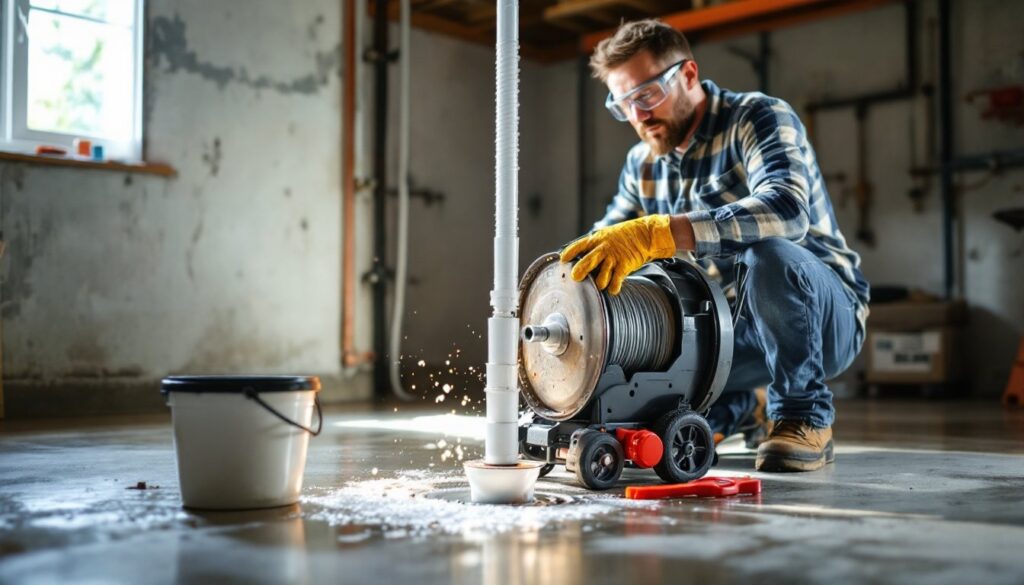
Drum augers are the workhorse of drain cleaning rentals. These machines feed a rotating steel cable, typically 50 to 100 feet long and 5/8 to 3/4 inch in diameter, down the pipe. As the cable spins, it either breaks through the clog or hooks debris so you can pull it back out. The cable is coiled inside a large drum (hence the name), and a foot pedal or lever controls the feed and rotation speed.
Drum augers excel at roots, grease buildup, and compacted debris. They fit most residential drains (4 to 6 inch lines) and are relatively easy to operate once you get the hang of feeding the cable smoothly. Rental shops usually stock multiple sizes: a 3/4-inch cable machine is standard for 4-inch residential main lines. Smaller 1/2-inch machines work for 2 to 3-inch branch lines (bathroom and kitchen drains).
Hydrojetting Equipment
Hydrojetting machines are the heavyweight option. They pump water at 4,000 to 8,000 PSI (pounds per square inch) through a nozzle into the drain. The sheer force of the water scours the pipe walls, dissolving grease, breaking through roots, and flushing debris downstream into the main sewer line.
Hydrojets clean more thoroughly than augers and don’t risk catching on delicate pipes. They’re excellent for heavy grease accumulation (common in restaurant or kitchen drains) and older clay or cast-iron pipes that augers might damage. The trade-off is cost, hydrojetting rentals run $100 to $200+ per day, and you need access to water and a drain large enough to accommodate the nozzle.
How to Choose the Right Rental Machine for Your Clog
Start by identifying where the clog is. Is it a slow-draining sink, a backed-up shower, or a sluggish toilet? Clogs in individual fixtures, bathroom or kitchen sinks, are usually in the trap or branch line, just a few feet down. A small 1/2-inch drum auger is sufficient and cheaper to rent. For whole-house drainage issues (multiple fixtures backing up), the problem is likely in the main line, requiring a larger machine.
Next, consider what you’re dealing with. If roots are the culprit (you’ll notice slow drains in spring or hear them mentioned from neighbors), an auger’s cable can shred them. If you suspect heavy grease (common in older kitchens or around restaurants), hydrojetting will work faster and leave the pipe cleaner. Hair and soap clogs? An auger usually handles that in minutes.
Call your local equipment rental shop, Home Depot, Sunbelt Rentals, or independent companies, and describe the situation. Staff can recommend the right machine size and may ask about your pipe material (PVC, ABS, cast iron, or clay). They’ll also confirm whether you need a permit or contractor for the work. Check rental tips for tools to understand equipment warranties and damage liability before you commit.
Budget matters too. If the clog is in a branch line, save money with a smaller auger. If it’s the main line and grease-heavy, the extra cost of hydrojetting often pays for itself by avoiding a second call.
Step-by-Step Guide to Using a Rented Drain Cleaning Machine
Before you start, safety first. Wear heavy-duty work gloves (leather or nitrile), eye protection, and long sleeves. If using a hydrojetter, wear a face shield and closed-toe boots. Keep bystanders and pets away from the work area.
1. Locate and access the clog. For branch lines (kitchen or bathroom), remove the drain cover or cleanout plug. For main-line clogs, use the main cleanout, usually a 4-inch PVC pipe in the basement, crawlspace, or yard. Have a bucket or pan handy: water and debris will flow out.
2. Insert the cable carefully. Feed the auger cable down the pipe slowly. Don’t force it: let the machine do the work. Once you feel resistance (the clog), engage the foot pedal to start the rotation. The spinning cable will gradually advance.
3. Work through the clog. Maintain steady pressure and feed as the cable chews through buildup. You’ll feel the cable suddenly give way when it breaks through. Keep the machine running for another 30 seconds to shred remaining debris.
4. Withdraw and flush. Pull the cable out slowly while it’s still spinning: this flushes loosened material down the line. Once the cable is fully retracted, run water down the drain to confirm flow. If the clog persists, repeat the process.
5. Clean and return. Wipe the cable and drum, coil it neatly, and return the machine on time to avoid late fees. Most rental shops include a brief demo when you pick up: don’t skip it, the operator will show you how their specific machine works.
Expect the entire process to take 30 minutes to 2 hours, depending on clog depth and severity. If you’re stuck after an hour, stop and call a professional, you don’t want to risk damaging pipes or creating a bigger problem. Resources like HomeAdvisor’s DIY guides and Family Handyman’s plumbing tips offer additional troubleshooting steps if you hit a snag.
Conclusion
Renting a drain cleaning machine is a smart move for homeowners facing a moderate clog and a tight budget. A day’s rental costs a fraction of a plumber’s service call, and the machine puts you in control. Choose the right tool, small auger for branch lines, larger auger or hydrojetter for main-line work, and follow the rental shop’s safety instructions. If the job feels beyond your comfort level or the clog won’t budge, hiring a professional remains the safest option. Either way, addressing clogs promptly prevents bigger, and costlier, plumbing failures down the road.