Table of Contents
ToggleA water softener doesn’t last forever, but most homeowners are surprised by how long one can keep working with proper care. Whether you’re installing your first system or replacing an aging one, understanding the lifespan of a water softener, and what affects it, helps you budget smartly and avoid the frustration of hard water sneaking back into your home. This guide walks you through typical lifespans, the factors that matter most, maintenance habits that pay dividends, and the telltale signs that replacement time is near.
Key Takeaways
- Most water softeners last between 8 to 15 years with average use and proper maintenance, though some can reach 20 years with diligent care.
- Water hardness levels are the biggest factor affecting how long a water softener lasts, as extremely hard water forces more frequent regeneration cycles that degrade resin faster.
- Regular salt replenishment, tank cleaning every 2–3 years, and annual water hardness testing are essential maintenance habits that significantly extend your softener’s lifespan.
- Metered (demand-initiated) softeners outperform timer-based models because they regenerate only when needed rather than on a fixed schedule, preserving resin longer.
- Warning signs that your water softener needs replacement include hard water returning despite normal regeneration, sluggish regeneration cycles, persistent salt bridges, leaks, or requiring service more than once yearly.
- A mid-range replacement system ($1,200–$2,000 installed) often makes better financial sense than repeated repairs on a softener past 12 years old.
Average Water Softener Lifespan
Most water softeners last between 8 to 15 years with average use and basic maintenance. Some units push closer to 20 years if you’re diligent about upkeep, while others quit sooner if neglected. That’s a decent run compared to a standard water heater (10–15 years) or HVAC system (15–20 years).
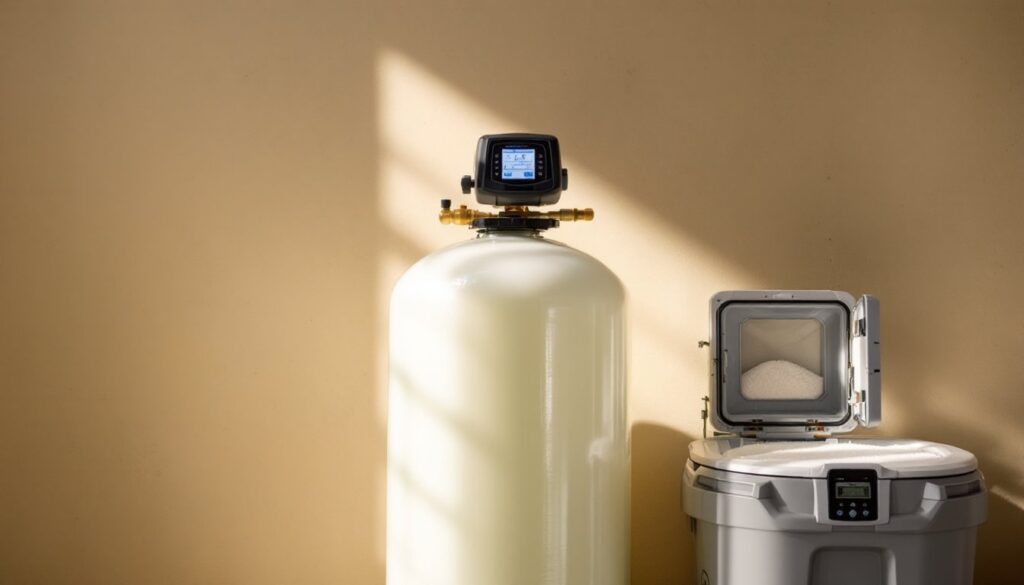
The variation matters because the type of softener you own shifts this timeline significantly. A salt-based ion exchange softener, the most common residential model, relies on a resin tank that gradually degrades over time. The resin beads themselves typically last 15–20 years, but the tank housing, control valve, and brine assembly may wear faster. Tankless or demand-activated softeners sometimes edge out a bit longer because they use water and salt more efficiently, placing less stress on internal components.
If you install a budget model from a big-box store versus a quality mid-range or commercial-grade unit, you might see 5–10 years versus 12–18 years respectively. Build quality, valve durability, and manufacturing tolerances all play a role. It’s not just about lifespan, it’s about when problems start. Cheap units may need repairs at year 4 or 5, eating into the savings of a lower purchase price.
Factors That Impact Your Water Softener’s Durability
Water Hardness Levels
Water hardness is the biggest single factor controlling how hard your softener has to work. Hardness is measured in grains per gallon (gpg) or parts per million (ppm): anything over 60 ppm is considered hard, and some areas hit 300+ ppm.
The harder your incoming water, the more frequently the resin beads regenerate (clean and recharge). If you live in a region with extremely hard water, think the Midwest or parts of Texas, your softener regenerates multiple times per week instead of weekly. More regeneration cycles mean faster resin degradation and higher salt consumption. A unit rated for 24,000 grains of hardness removal per regeneration cycle will tire faster in 200+ gpg water than in 100 gpg water. This doesn’t mean your softener fails sooner, just that the resin may become less efficient, requiring more frequent regeneration, and eventually replacement resin charges cost money.
Quality and Type of System
Metered softeners (also called demand-initiated softeners) last longer than timer-based models because they only regenerate when they detect hardness, not on a fixed schedule. A timer softener regenerates every 3 days or weekly regardless of use: if your household is small or water usage fluctuates, you’re regenerating when you don’t need to, wasting resin lifespan.
The control valve and resin tank construction matter more than marketing promises. Look for commercial-grade tanks (typically thicker polyethylene or fiberglass, not thin plastic) and valves with fewer moving parts. Simpler designs break less often. A softener with a solid-state control board fails less frequently than one with a mechanical timer or faulty brine tank float. Some manufacturers stand behind systems with 10-year warranties: others offer only 1–2 years. Warranty length often reflects confidence in longevity.
Also consider your water supply. If your well or municipal supply has sediment, iron, or chlorine, it degrades resin faster. Pre-filtration (a sediment filter upstream of the softener) can extend your softener’s life by protecting the resin from physical clogging and chemical damage. Many homes that ignore this step see resin failure at year 8 instead of 12.
Essential Maintenance to Extend Lifespan
The single best maintenance habit is regular salt replenishment. An empty brine tank forces your softener to regenerate without proper salt concentration, which damages resin and strains the control valve. Many homeowners refill salt monthly or every 6–8 weeks, depending on water hardness and household size. Use pellet or block salt (or specialty salts like potassium chloride if you prefer) in food-grade quality: avoid rock salt with clay impurities that cloud your brine tank.
Tank cleaning every 2–3 years prevents salt bridges (hardened salt caking at the tank bottom) and mushing (resin grit mixing with salt). If your softener is regenerating but water still feels hard, a salt bridge may be blocking brine flow. A simple approach: pour warm water into the brine tank, stir, and let it soak for an hour. This is not glamorous, but it works.
Inspect the resin tank outlet annually. Detach the tank cap and look for discolored resin or sediment buildup in the brine line. Cloudy resin or a foul smell signals iron or bacterial fouling: a resin cleaner (available at hardware stores or online) can restore performance for a time, though heavy fouling may require resin replacement.
Test your water hardness annually after regeneration. A simple test strip or a drop-test kit from a hardware store confirms your softener is actually softening. If hardness creeps back even though normal regeneration, the resin is exhausted and needs replacement, or your system is miscalibrated. According to Good Housekeeping’s product testing, well-maintained systems consistently outperform neglected ones by several years.
Also protect the exterior. If your softener sits in a garage or utility closet with humidity, condensation can corrode the control valve. A small dehumidifier or a drying cloth after checking salt levels prevents rust on metal components. In freezing climates, ensure the softener is indoors or properly insulated: freezing can crack the brine tank or burst internal lines.
Warning Signs Your Water Softener Needs Replacement
Hard water returns even though normal regeneration and adequate salt. Your soap doesn’t lather, dishes spot, and shower water feels slick again. This is the most common signal that resin has worn out. Before replacing the whole system, confirm the issue with a test strip: a malfunctioning control valve can also cause this, so a technician’s diagnostic is worth the call before spending $800–$2,500 on a new unit.
Sluggish or failed regeneration is another red flag. You hear the softener attempting to cycle, but it stops mid-cycle or runs much longer than usual. This suggests a stuck control valve, a clogged brine line, or water pressure issues in your home. If the pressure is fine and salt is present, a faulty valve solenoid or motor likely needs professional repair or replacement.
Salt bridges or mushing every month even though attempts to clean the brine tank signals deeper fouling or resin degradation. Over-treating the problem wastes time: replacement is the practical move. According to Today’s Homeowner’s cost guide, a new mid-range system ($1,200–$2,000 installed) often makes more financial sense than repeated service calls on a dying unit past year 12.
Water leaks from the tank, control valve, or brine line require immediate attention. Small leaks around the valve fitting can sometimes be tightened: a cracked tank cannot be repaired and requires replacement. Leaks also indicate sediment or corrosion has compromised the integrity of internal parts, so a band-aid fix rarely extends life meaningfully.
Rust or mineral buildup on the exterior of a steel tank or control valve indicates internal corrosion. While cosmetic rust on cast iron does not affect function, visible corrosion on tanks usually means water is seeping into the metal and degrading it from the inside. Replacement is the safer choice.
If your softener is between 10 and 15 years old and requiring service more than once a year, calculate repair costs against replacement. A $300–$500 service call on a 12-year-old unit is money poorly spent if the system will need replacement in 2–3 years. Family Handyman’s plumbing guides recommend keeping service records to spot patterns.
Conclusion
Plan on 8–15 years from a quality water softener, and understand that hardness levels, system type, and maintenance habits determine where your unit lands in that range. Don’t wait until hard water is visibly damaging your appliances and pipes to act. Check your salt level monthly, test water annually, and listen for unusual regeneration patterns. When signs of wear appear, diagnose early rather than limping along with a failing system. A replacement or professional repair now beats emergency replacements and water quality problems later.