Table of Contents
ToggleA Kenmore refrigerator filter keeps your drinking water and ice clean, but most homeowners don’t think about maintenance until water tastes funny or ice comes out cloudy. Replacing a water filter isn’t complicated, it’s one of those tasks that takes ten minutes and saves you money on bottled water. This guide walks you through choosing the right filter, recognizing when it needs replacing, and installing it correctly so your family gets the fresh, crisp water your Kenmore delivers.
Key Takeaways
- A Kenmore refrigerator filter should be replaced every six months under normal household use, or every three to four months if you have hard water or high sediment in your area.
- Genuine Kenmore filters meet NSF/ANSI certification standards that remove chlorine and contaminants, while third-party filters vary in quality and may not provide the same water protection.
- Watch for replacement signs including slow water dispenser flow, off-taste or cloudy ice, and the filter indicator light—don’t wait until water tastes bad to act.
- Replacing your Kenmore refrigerator filter takes about ten minutes and requires only unplugging the unit, locating the housing, shutting off the water valve, and hand-tightening the new cartridge.
- Clean the filter housing every three months with a damp cloth to prevent mold and slime buildup, and consider a whole-home pre-filter if you have sediment-laden or well water.
- Store replacement cartridges in a cool, dry place and set a phone reminder for your replacement schedule to ensure fresh, crisp water for your family year-round.
Understanding Kenmore Refrigerator Filter Types and Compatibility
Kenmore filters come in a few standard types depending on your refrigerator model and year. The most common are side-by-side configurations with filters tucked into the base grille, bottom-mounted models where the filter lives in the lower front corner, and top-mounted units (less common but still around). Each style has different filter cartridges, so grabbing the wrong one wastes money and doesn’t fit.
The easiest way to identify your filter type is to open your fridge door and look for the filter housing, it’s usually labeled “Filter” or shows a cartridge outline. Your Kenmore model number (stamped inside the door jamb or on the back) tells you exactly which filter to buy. Kenmore part numbers typically start with numbers like 9999, 4396, 4396841, or RWF1100A. If you can’t find your model number, snag a photo of the current filter and take it to an appliance parts supplier: they’ll match it instantly.
Third-party filters are cheaper than genuine Kenmore cartridges, but they vary wildly in quality. Genuine filters meet Kenmore’s NSF/ANSI 42 and 53 certification standards, which means they actually filter chlorine, sediment, and contaminants. Off-brand options may work, but you’re gambling on water quality. Many homeowners find the extra $10 or $15 for genuine parts worth the peace of mind.
Signs Your Kenmore Filter Needs Replacement
Your refrigerator usually tells you when a filter needs replacing through an indicator light, a small red or blue dot on the ice/water dispenser panel that glows when the cartridge is due. Some models use an on-screen message. Pay attention to that light: it’s calibrated to remind you after the filter has been running for about six months.
Beyond the indicator, watch for physical clues. Slow water flow from the dispenser, even when the tank is full, means the filter is getting clogged with sediment. Water or ice that tastes off, chlorine-like, stale, or slightly musty, suggests the activated carbon isn’t absorbing contaminants anymore. Cloudy or discolored ice is another red flag: the filter should catch particles before they freeze.
If your filter indicator bulb burns out or malfunctions and you’re not sure when to replace the cartridge, a good rule is every six months of normal use. If you have hard water or live in an area with lots of sediment (check with your local water utility), you might need to swap it every three to four months. Don’t wait until water tastes bad: that means you’ve been drinking filtered water for weeks past the filter’s effective life.
Step-by-Step Guide to Replacing Your Kenmore Refrigerator Filter
Locating and Accessing the Filter
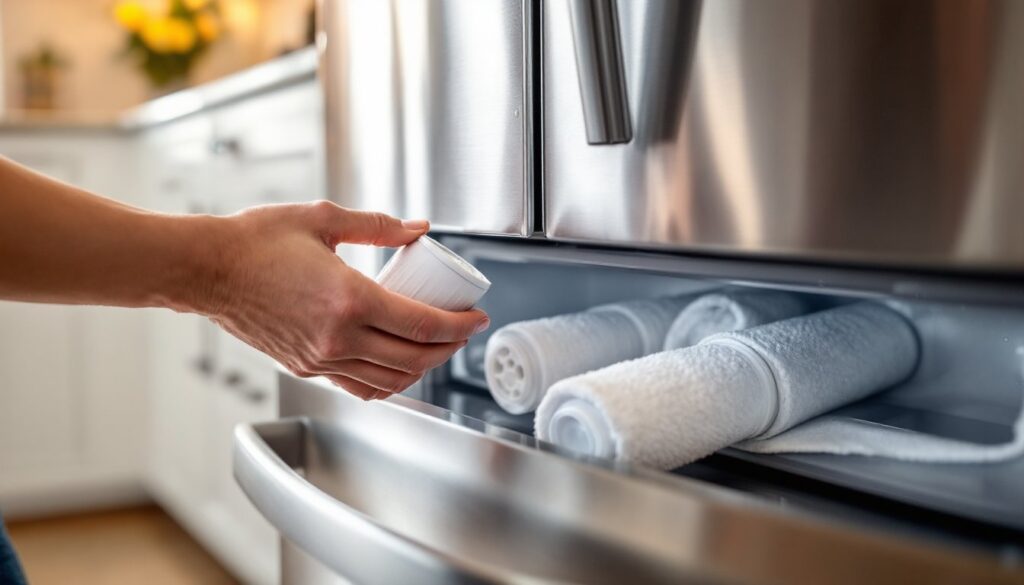
Start by unplugging your Kenmore or switching it off, working on electrical appliances while plugged in isn’t worth the risk. Next, locate your filter housing. For base-grille models, kneel down and look at the front bottom: the filter cartridge usually sits behind a removable panel. Twist the panel counterclockwise (or slide it out, depending on your model) and you’ll see the cylindrical filter.
For bottom-mounted side-by-side refrigerators, the filter sits in a compartment on the lower front corner, often behind a snap-off cover. Top-mounted filters (found on older or specialty Kenmore models) may be inside the fridge near the ceiling, tucked beside the icemaker water line.
Once you’ve found the filter, locate the water shut-off valve nearby, it’s usually a small black knob or lever attached to the incoming water line. Turn it clockwise to stop water flow. This prevents a mess when you unscrew the old cartridge.
Installing the New Filter Correctly
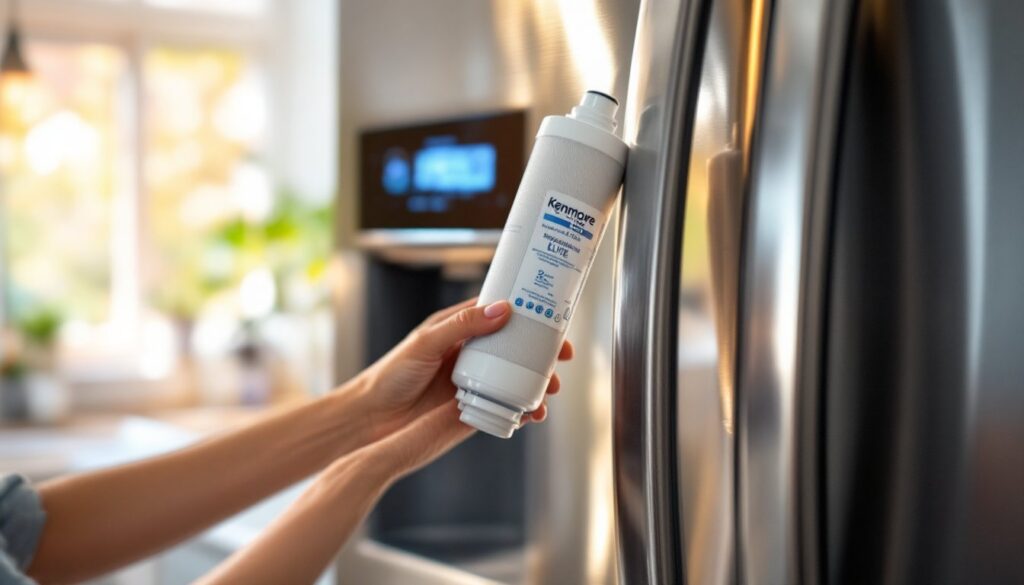
With water shut off, twist or unclip the old filter counterclockwise until it comes free. A little water will dribble out, so have a towel ready. Remove the new filter from its box and check that the rubber gasket (the ring at the top or bottom) is clean and intact. Align the filter’s grooves or notches with the housing and screw it in clockwise, or push it straight in if your model uses a clip design. Hand-tighten only, don’t use a wrench, or you’ll crush the gasket.
Turn the water valve back on and flush the system. You should see water flow from the dispenser within a few seconds. Let it run for 15-20 seconds to purge air and loose particles from the new filter. Reset the filter indicator light by pressing and holding the reset button (usually on the dispenser panel) for 3-5 seconds until the light turns off or changes color. Congratulations: your water is now filtered again.
How Often Should You Replace Your Filter?
The standard replacement schedule is every six months for typical household use, roughly 200-300 gallons of water. That assumes you’re using a moderate amount of ice and water from the dispenser, not filling pitchers constantly or running an ice machine 24/7.
Several factors shorten that window. If you live in an area with hard water (mineral-heavy), sediment-laden well water, or high chlorine levels (common in municipal systems), your filter will clog faster. Households with multiple people or frequent entertaining also use filters quicker. Conversely, if you rarely use the dispenser, you might stretch a filter to nine months, though most experts recommend replacing annually at minimum to prevent bacterial growth inside the housing.
Keep a calendar reminder on your phone or fridge. When you install a new filter, note the date so you’re not guessing later. Buying cartridges in bulk (many suppliers offer discounts for multi-packs) means you’ll always have a spare on hand and can avoid last-minute runs to the store when the water tastes off.
Maintaining Water Quality and Filter Performance
Replacing the filter is only half the job. Keeping the filter housing and water lines clean extends the life of your cartridge and ensures genuinely fresh water. Every three months, while the water is shut off for a filter swap, wipe down the inside of the housing with a clean, damp cloth to remove any slime or mold buildup. This is especially important in warm, humid climates.
Your water source matters too. If you’re on a well system or live in an area prone to sediment, consider installing a whole-home pre-filter (a larger, coarse-stage filter on your main water line) before the refrigerator. This catches sand, silt, and debris before it reaches your Kenmore, meaning your fridge filter lasts longer and works more efficiently. Resources like Good Housekeeping regularly test water filtration systems and appliance filters, so checking their reviews helps you pick compatible add-ons.
Store replacement cartridges in a cool, dry place, not under the sink where humidity can degrade the filter media. And if your fridge sits unused for more than a few weeks (during a vacation or if you’re replacing an old unit), run water through the dispenser for a minute to flush stagnant water from the lines before you drink it.
If your water still tastes or smells off after replacing the filter, check whether your incoming water line has a kink or is frozen (in cold climates). A blocked or damaged line prevents proper water flow, and the problem isn’t the filter. In that case, you may need an appliance technician.